For an industrial cable-management RFQ, specify the route and the manufacturer’s verified support/load configuration before choosing a tray or ladder. Cable tray, cable ladder and wire-mesh basket systems can all organise cable runs, but the suitable construction depends on the approved engineering design, environment and required accessories—not simply the lowest price per metre.
Cable tray, cable ladder and wire-mesh: what differs?
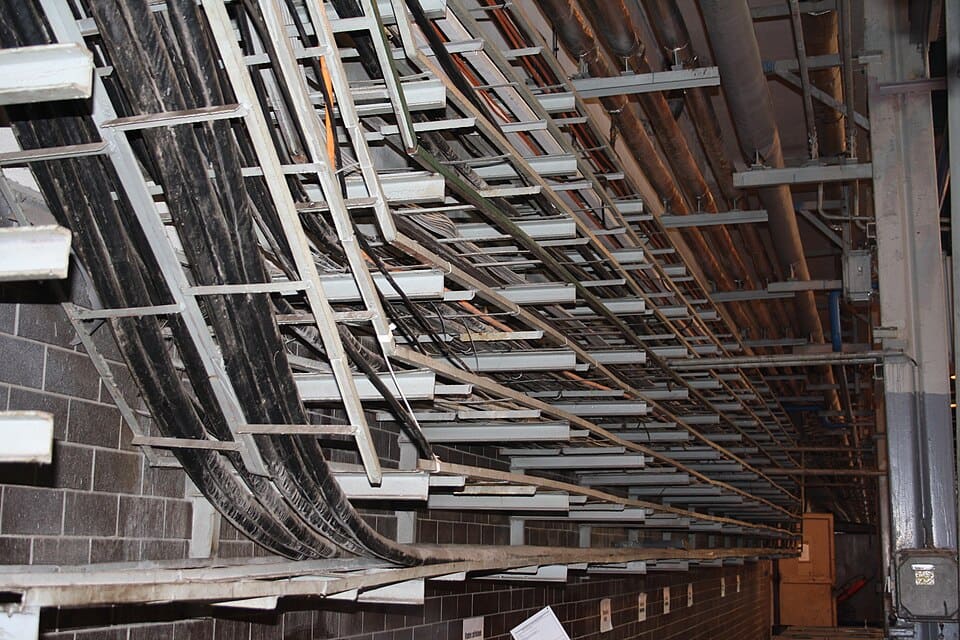
Perforated or solid-bottom cable tray provides a base to support and route cables. Perforations, cover options and material finishes differ by system; verify these against the project’s requirements. Cable ladder uses longitudinal side members with spaced transverse rungs; its support capability and allowable spans must be checked from the selected manufacturer’s data. Wire-mesh basket tray is another cable-support option that may suit certain building-service or data routes, subject to project approval. These descriptions are not substitutes for a structural or electrical assessment.
Seven details to include in the BOQ
- Route and location: drawings, elevation, indoor/outdoor placement, exposure to water, chemicals, coastal atmosphere and maintenance access.
- System type and dimensions: tray, ladder or basket; width, side depth, straight lengths, cover requirements and bend geometry.
- Material and finish: proposed base metal, coating, corrosion requirements and any project-defined finish or certification evidence.
- Design loading and support spacing: cable loading, proposed supports and span; ask suppliers for documented safe working load (SWL) at the actual configuration. Do not treat catalogue ratings for a different span as interchangeable.
- Fittings and supports: horizontal/vertical bends, tees, reducers, splice plates, brackets, hangers, lids and fasteners; count accessories separately.
- Electrical interface: project-defined bonding, continuity and protective conductor provisions. Do not assume a tray system is an acceptable protective earth conductor without engineering approval and supporting evidence.
- Commercial delivery: quantities by item, drawing revision, site or delivery address, staging, required dates and documentation requirements.
An RFQ line that suppliers can price
Use a structured description such as: “[Perforated tray / cable ladder / basket], [material and finish], [width × side depth], [required straight section lengths], [indoor/outdoor environment], [design cable load], [support span], [accessory schedule], [applicable standard and project drawings], total quantity [units], delivery to [location]. Please confirm manufacturer, model/system, SWL test data for the specified arrangement, included fittings and lead time.”
Separate your BOQ into straight runs, supports, bends/tees, covers and fixings so commercial quotations can be compared line by line.
Standards and documentation worth checking
IEC 61537:2023 covers requirements and tests for cable tray and cable ladder systems. Its 2023 revision includes changes to corrosion classification and safe-working-load testing. The project engineer should identify the applicable edition and required evidence; simply naming the standard does not prove an offered system’s compliance.
Where the package also includes cable glands, IEC 62444:2010 is a separate standard for cable glands—not a substitute for IEC 61537 tray/ladder evidence. Request manufacturer catalogue references, installation instructions and any project-required declarations.
Common quotation mistakes
- Requesting “cable tray, 100 metres” without material, finish, geometry or accessory quantities.
- Comparing tray and ladder offers without checking each manufacturer’s SWL and intended support arrangement.
- Omitting corrosive-environment requirements and project-specified bonding provisions.
- Assuming the cheapest straight-run rate includes brackets, covers, bends and delivery.
Need cable trays or electrical installation materials in Singapore?
Grenglo Energy Pte Ltd handles specification-led industrial electrical sourcing, including cable trays, ladders, enclosures and glands. Review our electrical installation materials category and send the approved drawing or itemised BOQ through our project quotation form. Availability, technical acceptance, documentation and delivery are confirmed for each enquiry.
Technical references: IEC 61537:2023 (cable trays and ladders); IEC 62444:2010 (cable glands). This purchasing checklist does not replace site-specific electrical or structural design.